| The player will show in this paragraph
|
To you. To those you love.
Know the signs. Act fast.
A stroke happens when a part of the brain dies from lack of blood, usually because one of the arteries that supply oxygen-carrying blood to the brain has been damaged. There are two ways this can happen:
- Clogged vessel or ischemic stroke: Caused by blockage of a blood vessel in the brain, usually by a blood clot or by fatty deposits on the vessel wall. 85% of strokes are ischemic.
- Burst vessel or hemorrhagic stroke: Caused by a ruptured blood vessel, preventing normal flow and allowing blood to leak into brain tissue, destroying it. This occurs in 15% of strokes.
Stroke is a common and often misunderstood condition and its early symptoms are often ignored. Some brain cells deprived of oxygen die within minutes. Others may take a few hours to die depending on the nature of the blockage or hemorrhage. The loss of physical and mental functions is often permanent and can include motor-function disability. The most effective treatment for stroke can be administered if it is within three hours of the onset of stroke. Although strokes can occur at any age, most stroke patients (two-thirds) are over the age of 65.
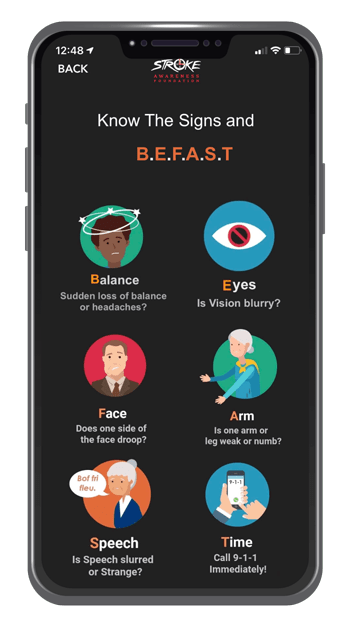
WALK (Is your balance off?)
TALK (Is your speech slurred or face droopy?)
REACH (Is your vision all or partly lost?)
FEEL (Is your headache severe?)
If you recognize any of these signs – even if they go away – call 9-1-1 immediately and tell the operator, paramedics, or emergency room staff, “I think this is a stroke.”
FAST stands for face, arms, speech and time, and is being used as part of a campaign by the Stroke Awareness Foundation to educate the public about warning signs of stroke and seek proper medical services immediately. If you think a person is having a stroke, call 9-1-1, especially if the person has trouble with these basic commands.
|